Turning years of discussions into a clear roadmap
I facilitated a cross-functional workshop process that helped IKEA teams move from broad discussions and competing perspectives to a shared direction for improving their PLM classification system.
By grounding conversations in real engineering workflows and user problems, the work created alignment across 15+ stakeholders and produced a prioritized roadmap for future improvements.
Year
2024 (3 months)
Role
Facilitator
THE CHALLENGE
Years of discussion without a shared direction
For several years, IKEA teams had been trying to improve the product classification system used within their PLM infrastructure.
The system was important for product data quality, component reuse and daily engineering workflows, but progress had stalled despite multiple initiatives and cross-functional discussions.
One of the main problems was that conversations stayed too abstract. Leadership discussions focused on strategy and governance, while engineers struggled with concrete workflow issues in their day-to-day work.
Without a shared understanding of the actual user problems, teams found it difficult to align, prioritize and move the work forward.
THE SOLUTION
A facilitation process focused on real problems
I created a workshop structure that helped teams move from broad discussions into focused problem-solving around concrete user and workflow challenges.
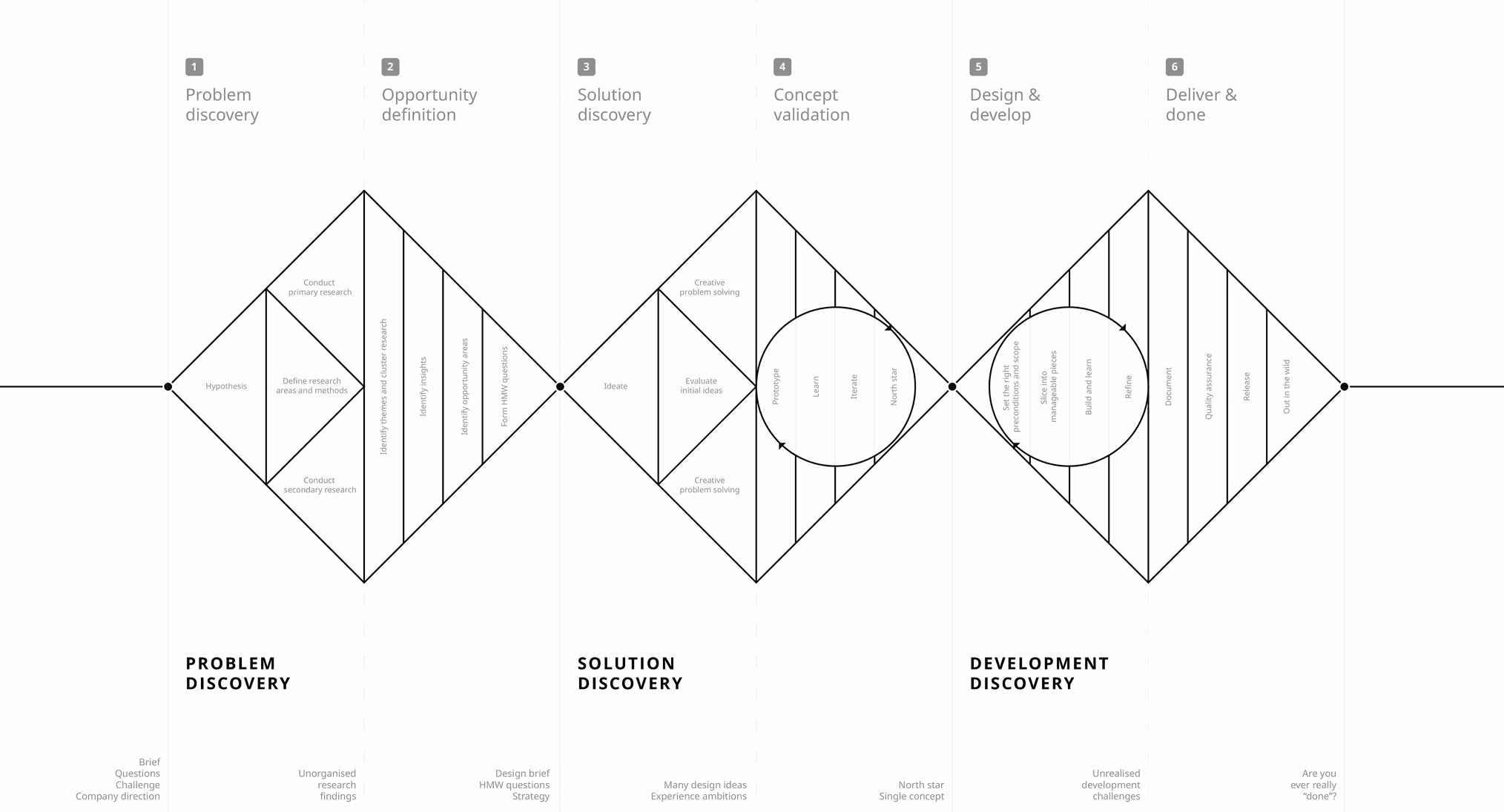
The process
Research & analysis
I identified pain points through interviews, workshops and observations of existing engineering workflows.Framing the key problems
Research findings were translated into focused “How Might We” questions that teams could align around.Prioritization
Stakeholders worked together to identify the most important problems to address first.Focused ideation workshops
Each workshop focused on one priority area to keep discussions concrete and actionable.
The three priority questions
"How might we make the purpose and value of classification understandable to users?"
"How might we increase user understanding and confidence in the accuracy of part classification?"
"How might we ensure efficiency and accuracy in the classification process?"
THE IMPACT
Creating alignment around a shared direction
The workshops helped teams move from broad discussions and competing perspectives into concrete priorities and next steps.
The work resulted in:
A prioritized roadmap with short-, medium- and long-term improvements
Stronger alignment across engineering, product and leadership stakeholders
A reusable workshop structure for future classification initiatives
Clear momentum for continued implementation and design work
"Thanks for holding this together in a very good way. It helped us funnel down the topic to something tangible and concrete with clear activities. This process with the diamonds helped us methodically get through the topic and built a foundation we can fall back on."
Development Manager, IKEA
THE RESEARCH
Understanding why engineers struggled with classification
To understand why previous initiatives had struggled to gain traction, I interviewed engineers and system users working with classification workflows on a daily basis.
The research revealed several recurring usability and workflow issues.
Key findings
Engineers often didn’t understand why classification mattered or how detailed it needed to be
The classification structure was difficult to navigate
Bulk editing workflows created repetitive manual work
Attributes and naming conventions were unclear or inconsistently documented
Teams lacked shared guidance for how classification should be handled
The problems were not only technical. Different teams also had very different understandings of how the system should work and what good classification looked like.
After identifying the main pain points, I translated the findings into focused “How Might We” questions that could be used in collaborative workshops and prioritization sessions.
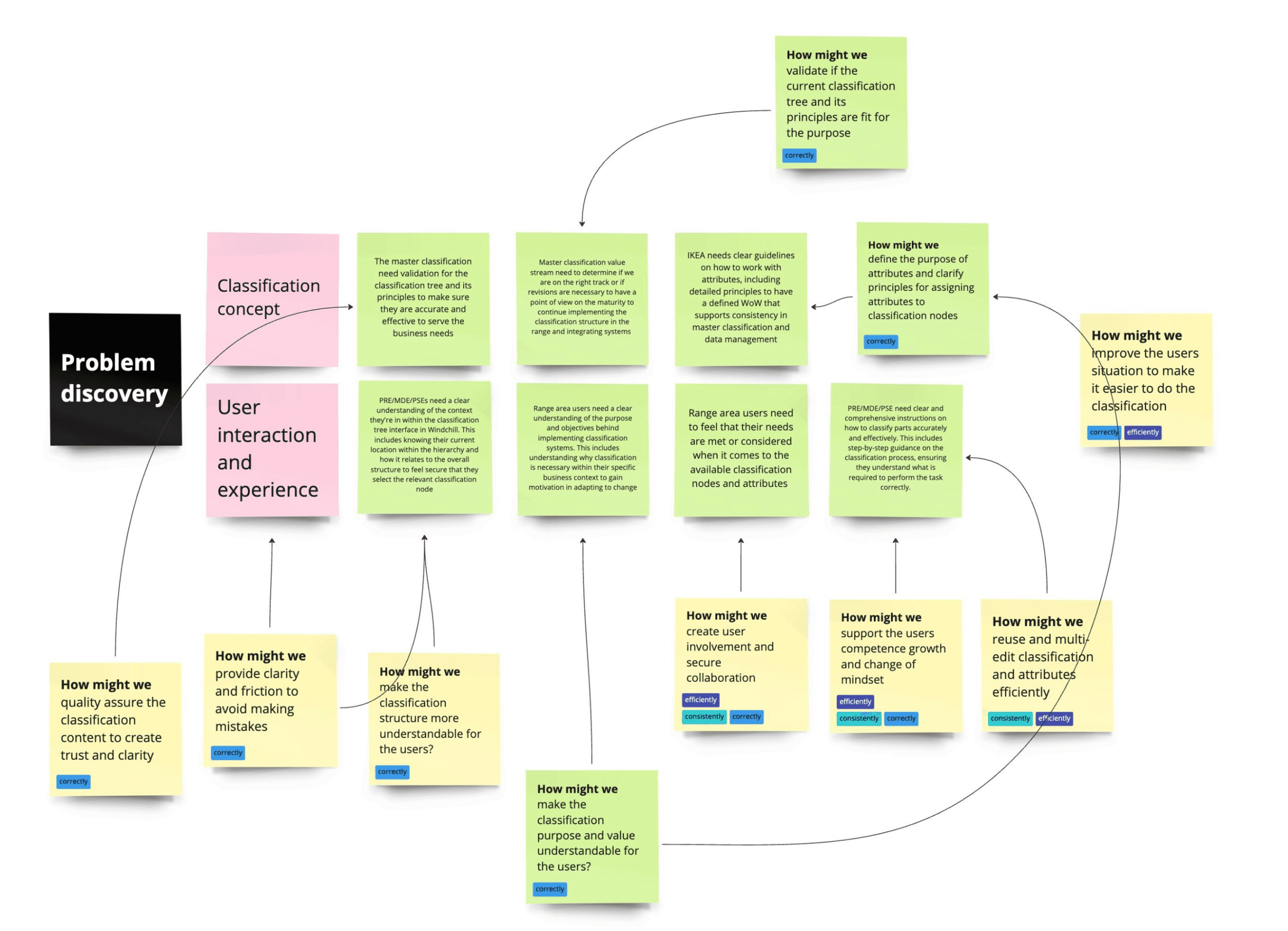
After identifying the main pain points in the interviews, I translated the findings into focused “How Might We” questions across four key areas.
This gave teams a shared starting point for discussing concrete user and workflow problems instead of abstract policy discussions.
THE MAIN INSIGHT
The discussions were never grounded in real user problems
The main challenge was not a lack of ideas. It was that teams approached the problem from very different perspectives without a shared understanding of the actual user and workflow issues.
Engineers struggled with concrete usability problems in their day-to-day work, while leadership discussions often stayed at a more abstract strategic level.
By translating research findings into focused “How Might We” questions, I created a shared starting point for discussions around real engineering workflows and user needs.
This shifted conversations from abstract debates into concrete problems teams could prioritize and solve together.
THE WORKSHOPS
Focused workshops around concrete problems
I facilitated three workshops, each focused on one core challenge:
Understanding the purpose and value of classification
Increasing confidence in classification accuracy
Improving efficiency and workflow speed
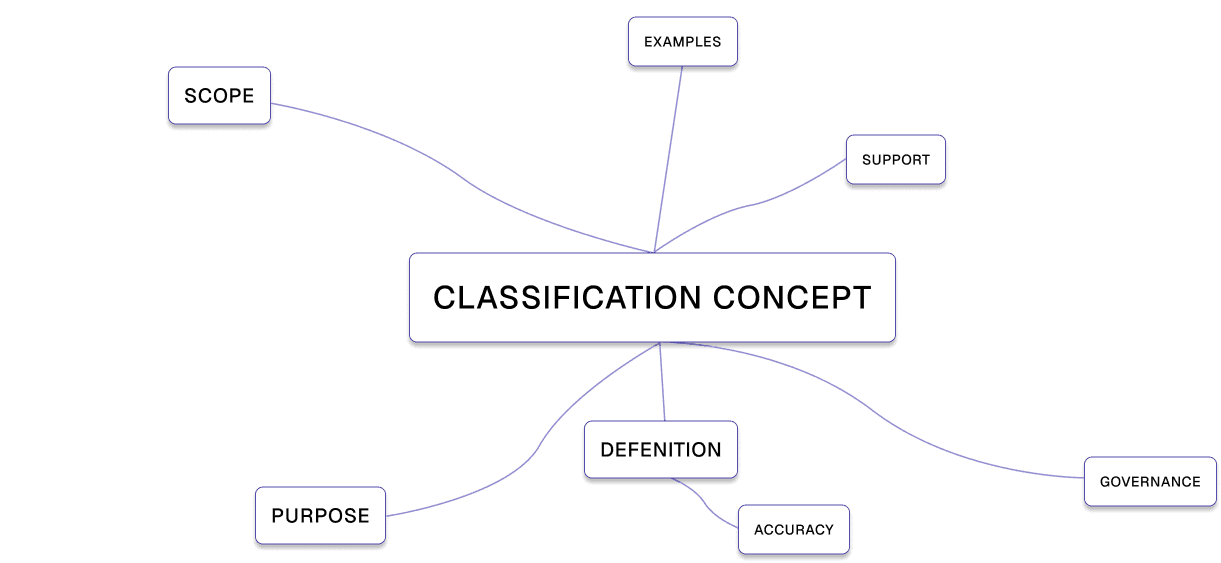
The workshops used collaborative techniques such as
mind mapping
affinity clustering
dot voting
impact/effort prioritization
Keeping each workshop focused on a single problem area helped discussions stay concrete and easier to prioritize.
OUTCOMES & PRIORITIZATION
Turning workshop ideas into a shared roadmap
The workshops generated a large number of ideas and improvement proposals across different teams and problem areas.
To make the work easier to prioritize, I organized the ideas using an impact/effort framework together with stakeholders.
This helped the teams identify:
quick improvements that could move into development quickly
areas that required deeper exploration
larger long-term initiatives requiring broader organizational investment
High Impact, Low Effort
Improvements ready for implementation
Clear workflow value with limited development effort
High Impact, Medium Effort
Concepts requiring deeper design and technical exploration
Medium-term improvements with broader workflow impact
High Impact, High Effort
Larger structural improvements across systems and teams
Long-term investments requiring cross-functional alignment
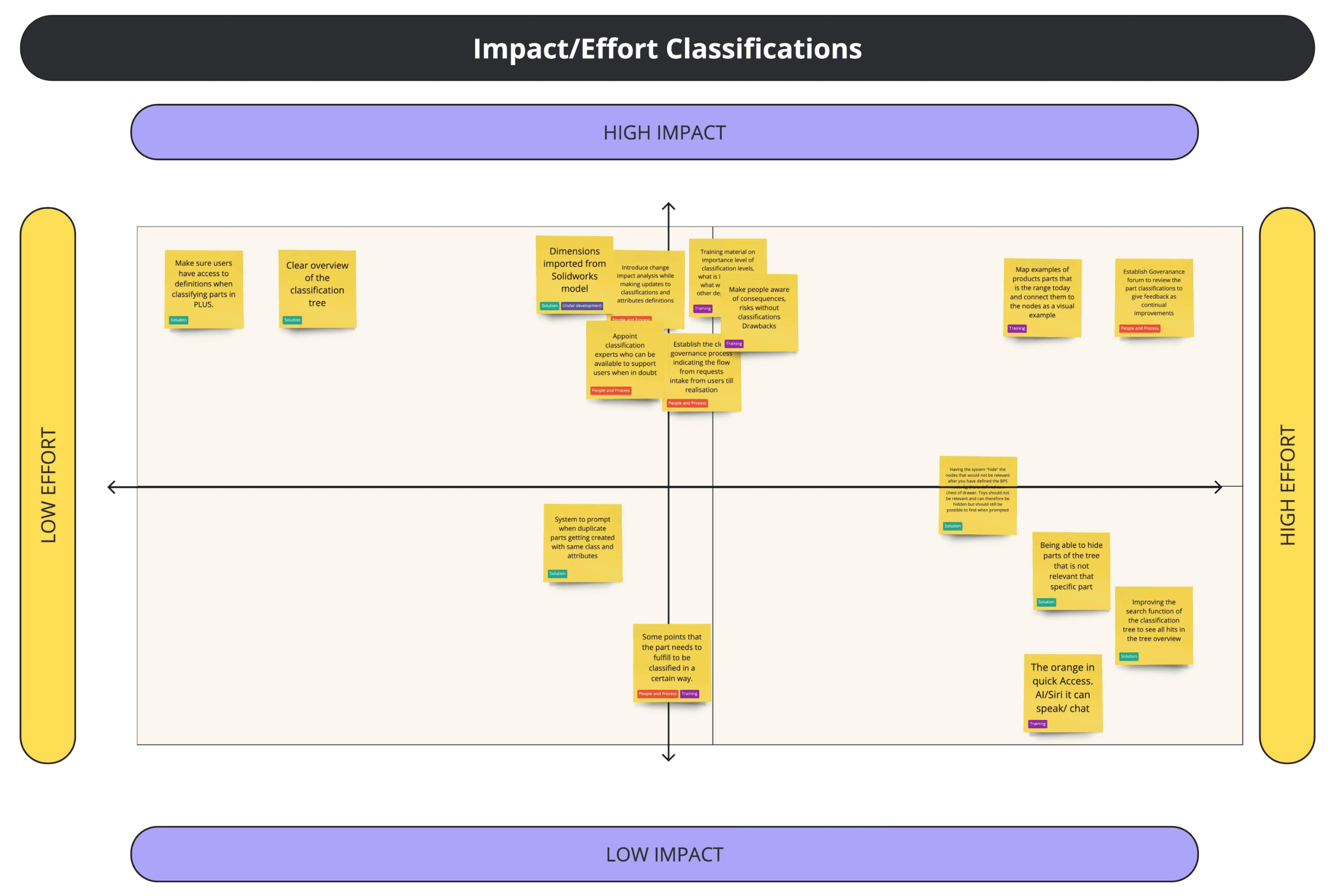
Workshop ideas were mapped using an impact/effort framework to support roadmap prioritization.
THE FINAL RESULT
Turning discussions into a roadmap teams could move forward with
The workshops helped teams move from broad discussions into clearer priorities and concrete next steps.
Key Outcomes
A prioritized roadmap with short-, medium- and long-term improvements
Stronger alignment across engineering, product and leadership teams
Shared focus around real workflow and usability problems
Clear momentum for continued implementation work
A workshop structure that could be reused in future initiatives
What changed
The initiative moved from ongoing discussions into active prioritization and implementation planning.
Some improvements were ready to move directly into development, while larger structural changes were identified as longer-term investments requiring broader collaboration.
LEARNINGS
What this project taught me about complex collaboration
This project changed how I think about design work in large organizations.
I learned that some of the most important design problems are not only about interfaces or workflows, but about helping teams build a shared understanding of the problem they are trying to solve.
1. Real progress starts with concrete user problems
The biggest shift happened when discussions became grounded in actual engineering workflows instead of abstract strategy discussions.
Turning research findings into focused workshop questions gave teams a shared starting point for collaboration and prioritization.
2. Structure creates momentum
Many stakeholders had already spent years discussing the problem without clear progress.
Breaking the work into smaller, focused workshop sessions made discussions easier to navigate and helped teams regain momentum.
3. Designers can shape how organizations collaborate
This project reinforced that design can create value beyond interfaces and screens.
In complex organizations, helping teams align around problems, decisions and priorities can be just as important as designing the final solution itself.
Back to selected work